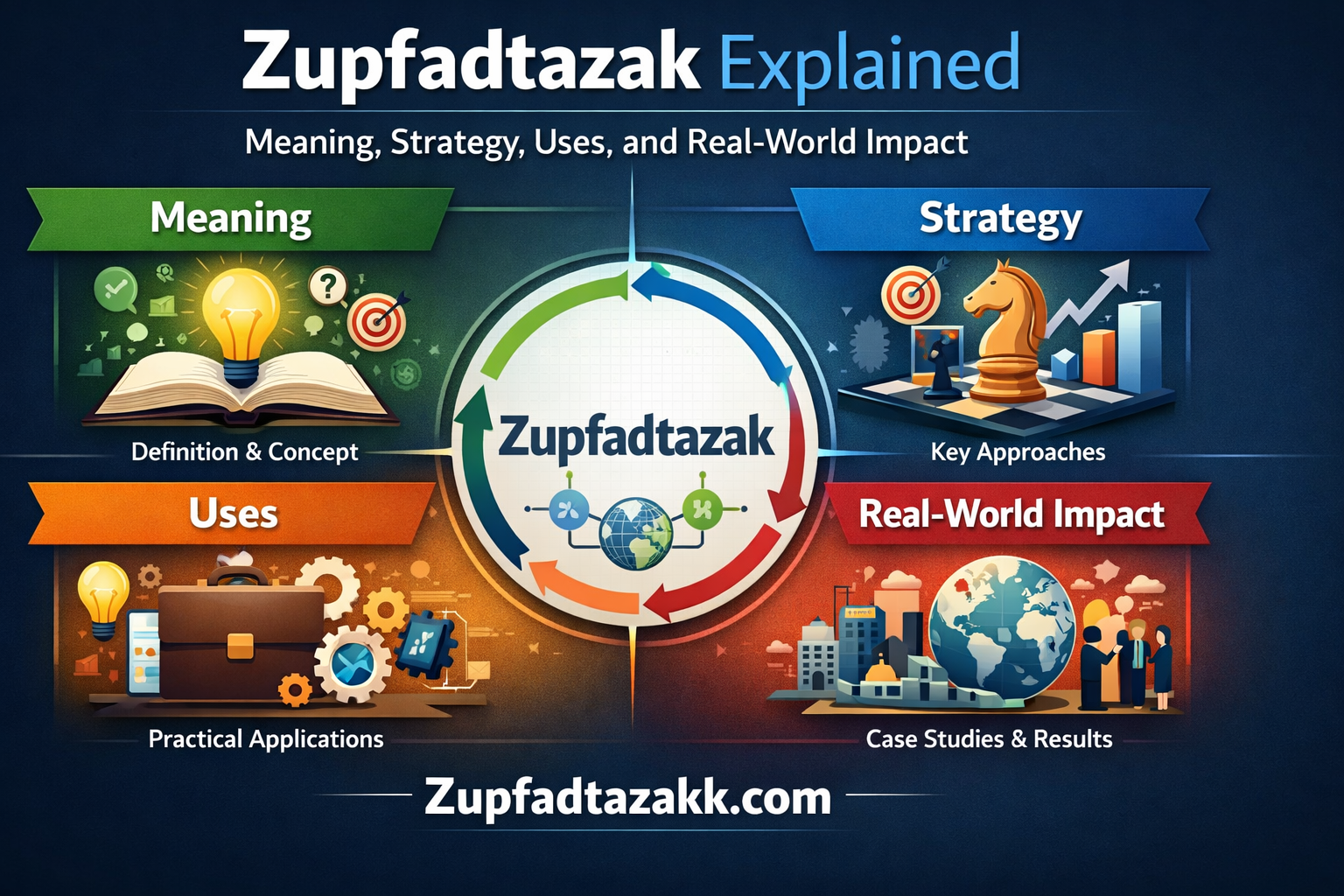
Zupfadtazak Explained: Meaning, Use Cases, Strategy, and Future Impact
Zupfadtazak is a term that has quietly entered digital conversations, strategic discussions, and exploratory research spaces, often without a clear definition attached. That ambiguity has created curiosity, speculation, and in some cases confusion, which is exactly why a comprehensive, grounded explanation matters now.
This guide approaches zupfadtazak as a developing concept rather than a buzzword. Instead of hype, it focuses on meaning, structure, application, and long-term relevance, offering a practical framework readers can actually use.
The Conceptual Meaning of Zupfadtazak
At its core, zupfadtazak refers to a structured way of combining fragmented systems into a cohesive, adaptive whole. It emphasizes integration over replacement, making it particularly relevant in environments where legacy processes coexist with emerging models.
Rather than being tied to one industry, zupfadtaza functions as a meta-concept. It describes how ideas, tools, or behaviors align over time to create resilience, efficiency, and strategic clarity without forcing uniformity.
Historical Context and Conceptual Origins
The origins of zupfadtazak are not rooted in a single academic paper or industry launch. Instead, the idea emerged gradually as practitioners searched for language to describe adaptive integration across complex systems.
Early references appeared in interdisciplinary discussions, where technology, organizational behavior, and cultural analysis overlapped. Zupfadtazak became shorthand for patterns people recognized but struggled to name.
Why Zupfadtazak Matters in Modern Systems
Modern systems are rarely built from scratch. They evolve, layer by layer, often inheriting inefficiencies and contradictions. Zupfadtazak matters because it provides a way to understand and manage that reality without oversimplification.
By focusing on alignment rather than disruption, zupfadtaza supports sustainable progress. It allows systems to grow while respecting constraints, which is increasingly valuable in fast-changing environments.
Core Principles That Define Zupfadtazak
One defining principle of zupfadtazak is adaptive coherence. Components are allowed to remain distinct, but their interactions are intentionally designed to reduce friction and increase shared value.
Another principle is contextual responsiveness. Zupfadtaza does not prescribe fixed rules; it responds to environment, scale, and purpose, making it flexible without becoming vague.
Zupfadtazak Versus Traditional Frameworks
Traditional frameworks often rely on rigid hierarchies or linear workflows. Zupfadtaza differs by encouraging dynamic relationships that evolve as conditions change.
This difference makes zupfadtazak particularly useful where predictability is limited. Instead of enforcing control, it emphasizes feedback, iteration, and alignment.
Practical Applications Across Industries
In business environments, zupfadtaza appears in hybrid operational models that blend automation with human judgment. Companies using this approach often see smoother transitions during change initiatives.
In creative or cultural fields, zupfadtazak supports collaboration without dilution of identity. Contributors retain autonomy while participating in a shared structure.
Zupfadtazak in Digital Strategy
Digital ecosystems are rarely clean or unified. Zupfadtaza provides a lens for integrating platforms, data flows, and user experiences without forcing complete consolidation.

This approach reduces technical debt over time by prioritizing interoperability and long-term adaptability instead of short-term optimization alone.
Organizational Design and Zupfadtazak
Organizations applying zupfadtazk often move away from rigid departmental silos. They design roles and processes that overlap intentionally, creating shared accountability.
The result is not chaos, but controlled flexibility. Teams can respond faster because alignment replaces excessive approval layers.
Cultural Implications of Zupfadtazak
Culturally, zupfadtazak encourages pluralism. Different perspectives are not just tolerated but structured into the system itself.
This reduces conflict caused by forced consensus and instead channels diversity into productive tension that drives innovation.
Common Misconceptions About Zupfadtazak
One misconception is that zupfadtaza lacks structure. In reality, it requires more intentional design than rigid models because relationships must be actively managed.
Another misunderstanding is that it is purely abstract. While conceptual, zupfadtazak becomes tangible through processes, tools, and behaviors.
Zupfadtazak and Long-Term Sustainability
Sustainability is not only environmental but systemic. Zupfadtaza supports sustainability by reducing waste caused by constant replacement and reinvention.
By extending the useful life of systems through integration, organizations conserve resources while remaining competitive.
Measuring the Impact of Zupfadtazak
Measuring zupfadtazak is less about single metrics and more about patterns. Indicators include reduced friction, faster adaptation, and improved cross-functional outcomes.
Qualitative feedback often matters as much as quantitative data, especially in early stages where shifts are subtle but meaningful.
Comparative Framework Overview
| Aspect | Traditional Models | Zupfadtazak-Oriented Models |
|---|---|---|
| Structure | Rigid and hierarchical | Adaptive and relational |
| Change Response | Disruptive | Integrative |
| Scalability | Linear | Contextual |
| Resilience | Limited | High |
| Cultural Fit | Uniform | Pluralistic |
A Strategic Quote on Integration
“True progress comes not from replacing what exists, but from learning how its parts can work together better.”
This perspective captures the essence of zupfadtaza and explains why it resonates across disciplines.
Zupfadtazak in Emerging Trends
As systems grow more interconnected, the relevance of zupfadtaza increases. Trends like modular technology and decentralized organizations naturally align with its principles.
Rather than being a reaction to trends, zupfadtazak often anticipates them by focusing on relationships instead of tools.
Implementation Challenges and Realities
Implementing zupfadtaza requires patience. Because it works with existing complexity, early progress may feel slower than radical change approaches.
However, this patience often pays off through reduced resistance and more durable outcomes over time.
Leadership Mindset and Zupfadtazak
Leaders who succeed with zupfadtazak tend to value listening over control. They focus on shaping conditions rather than dictating outcomes.
This mindset shift can be challenging but often results in stronger trust and clearer strategic alignment.
Zupfadtazak as a Learning System
Learning is continuous within a zupfadtaza framework. Feedback loops are designed into the system so adjustment becomes routine rather than exceptional.
This transforms mistakes into data, supporting steady improvement without fear-driven decision-making.
Future Outlook for Zupfadtazak
Looking ahead, zupfadtazak is likely to gain clearer definitions as more practitioners adopt and refine it. Its flexibility allows it to evolve without losing coherence.
As complexity becomes the norm, concepts like zupfadtaza may shift from optional frameworks to essential literacy.
Conclusion
Zupfadtazak offers a way to think clearly in complex environments. It does not promise simplicity, but it does provide coherence, adaptability, and sustainability.
For individuals and organizations navigating layered systems, zupfadtaza is less a solution and more a compass, guiding decisions toward alignment and long-term value.
Frequently Asked Questions
What does zupfadtazak actually mean?
Zupfadtazak describes an approach to aligning diverse systems or elements so they function together without losing their individual strengths.
Is zupfadtazak a methodology or a mindset?
Zupfadtazak functions as both, offering conceptual guidance while influencing practical design and decision-making.
Can small organizations use zupfadtazak?
Yes, zupfadtaza scales well because it adapts to context, making it suitable for small teams and large enterprises alike.
How is zupfadtazak different from integration?
Integration is often technical, while zupfadtazak includes cultural, strategic, and behavioral alignment.
Will zupfadtazak remain relevant in the future?
As complexity increases, zupfadtazak is likely to become more relevant, not less, because it addresses fundamental systemic challenges.