
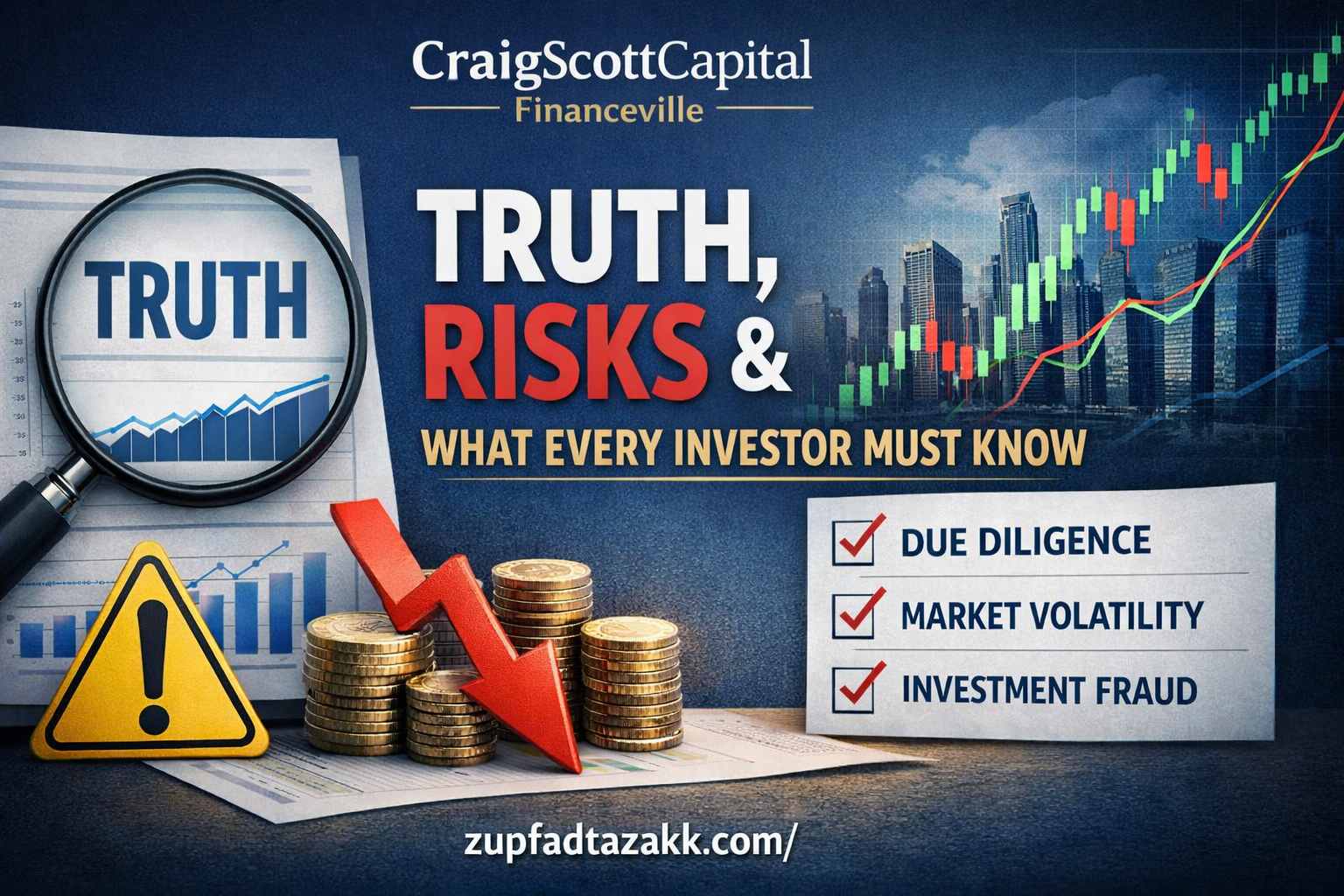
CraigScottCapital Financeville: The Definitive Guide for Investors
The term craigscottcapital financeville appears online in articles, reviews, and promotional content — but what does it really mean? In this deep‑dive, authoritative guide, you’ll get clear context, verified history, critical risk insights, branding analysis, and practical guidance for investors, consumers, and curious readers. We’ll unpack the name craigscottcapital financeville in a way few other sources do: rigorously, transparently, and without overly promotional language.
At its core, craigscottcapital financeville sits at the intersection of history, marketing, and financial risk. One part references a real, regulated broker‑dealer that once existed. Another part — “Financeville” — is a thematic branding seen in recent blogs, SEO content, and finance commentary. Understanding the mix of fact, fiction, and modern reinterpretation is essential to protecting your money and making informed decisions. It’s this clarity, not confusion, that we aim to deliver.
What CraigScottCapital Really Was
CraigScottCapital began as a broker‑dealer operating in the U.S. financial markets, registered with regulators and providing trading and investment services to clients. Regulatory records confirm it was registered with FINRA (Financial Industry Regulatory Authority) and active in the early 2010s. While the firm offered brokerage services, investment advice, and related capital‑market activities, its business practices drew increasing regulatory scrutiny.
The most significant turning point in the firm’s history came when regulators found serious compliance deficiencies, including “churning” — excessive trading in client accounts to generate commissions rather than support client goals — and failures in supervision and record‑keeping. These issues ultimately led to the firm’s expulsion from FINRA membership in 2017.
In other words, the historical entity behind craigscottcapital financeville is not currently operating as a licensed broker or financial adviser under that name. Investors cannot verify modern regulatory status because, according to credible watchdog analysis, no such registered entity exists today.
How the “Financeville” Branding Emerged
The term “Financeville” doesn’t refer to a specific legal entity or regulated financial hub. Instead, it appears to be a thematic label used by bloggers, advertisers, and SEO‑oriented content creators to evoke a community or platform in the financial space. When paired with craigscottcapital, it gives an impression of a vibrant financial ecosystem, yet this usage is descriptive and marketing‑oriented rather than evidentiary.
Many articles presenting craigscottcapital financeville describe colorful scenarios — from client success stories to advanced investment analytics and fintech platforms — but these narratives are not backed by public records of a licensed, operational firm under that name.
This branding trend highlights how defunct firm names can be recycled online: content producers leverage prior recognition (even negative) to drive traffic, visibility, and engagement. That’s why understanding the difference between history and marketing promises is crucial when you see craigscottcapital financeville in search results.
Regulatory Record: What Really Happened
Regulatory documents and financial news archives give us the most reliable picture of Craig Scott Capital’s operational past.
FINRA’s official actions against the firm focused on supervisory failures and excessive trading practices that harmed clients. Officials found that brokers executed trades frequently with little regard for client investment objectives, generating disproportionate commissions. This pattern is known as “churning,” and it’s specifically prohibited because it puts the firm’s interests ahead of clients’ financial welfare.
As a result, FINRA expelled Craig Scott Capital from the industry in September 2017, and the firm lost its broker‑dealer status. Key individuals, including senior leadership, were barred from regulated industry positions.
This outcome is part of the public record; interested readers can verify the firm’s regulatory history through FINRA’s BrokerCheck database or SEC enforcement archives. The regulatory discipline highlights the real consequences of compliance failures and underscores why relying on current licensing verification matters more than trusting website claims.
Common Misconceptions Around CraigScottCapital Financeville
Because the phrase craigscottcapital financeville blends historical entity names with creative branding, it has led to several common misunderstandings:
Many modern articles cast the phrase as a thriving financial services brand offering investment tools, wealth management platforms, or real‑time analytics. But credible searches find no current, licensed firm operating under that name with verifiable credentials.
Some promotional reviews describe advanced features like AI‑driven portfolio builders, mobile investment dashboards, and tailored advisory services — none of which can be independently confirmed with regulator filings or trusted financial database entries.
There’s also a misconception that “Financeville” is a real place or financial district. In fact, it’s a thematic construct used for narrative flair in blog content and doesn’t represent a geographically or legally recognized “financial hub.”
Separating factual history from compelling marketing requires due diligence and skepticism — especially in finance, where exaggeration and repurposed names can blur truth and fiction.
Risks With Modern Uses of the Name
Because craigscottcapital financeville is still used in marketing and promotional contexts online, recognizing associated risks is vital. While many sites present digital tools, educational content, or investment “insights,” they often lack:
- Regulatory registration with bodies like FINRA or the SEC
- Audit reports or transparent fee schedules
- Clear leadership credentials or corporate governance disclosures
- **Independent third‑party verification of investment products or returns
This absence of verification creates real investor risk. Without confirmed licensing or oversight, a platform can’t guarantee client protections available through regulated financial firms — for example, arbitration options, audited reporting, or enforcement oversight.
A key rule of safe investing is simple: never assume legitimacy based on branding language alone. Always verify a firm’s status with official regulators.
Table: CraigScottCapital Financeville — Claims vs. Regulatory Reality
| Category | Promotional Claims Often Seen Online | Verified Reality |
| Existence of Current Firm | Active financial brand with services | No licensed entity currently registered |
| Regulatory Status | Implied compliance | Expelled from FINRA in 2017 |
| Investment Services | AI portfolios, wealth tech, fintech tools | No audited verification |
| Risk Oversight | Built‑in investor protections | No known regulatory oversight |
| Historical Record | Often omitted | Public FINRA disciplinary actions |
| Branding “Financeville” | Real financial district | Thematic or marketing term |
This comparison highlights why craigscottcapital financeville requires careful interpretation: real regulatory history exists, but its modern portrayal is often aspirational or unverified.
How to Vet Financial Services Using This Case
If you encounter craigscottcapital financeville in search results, ask these questions before engaging financially:
- Is the firm registered with FINRA or the SEC? Always confirm using official databases.
- Does the website disclose audited financials? Transparency matters.
- Are fees, risks, and investment structures clearly outlined? Beware of vague promises.
- Is there independent user feedback? Verifiable testimonials and reviews lend credibility.
- Does the firm provide clear corporate leadership information? Lack of a disclosed team is a red flag.
“Due diligence isn’t optional — it’s your first line of protection in an industry where names can be reused for SEO or brand recall.” — Financial Compliance Expert (paraphrased expert insight)
Conclusion
The story of craigscottcapital financeville is a nuanced one. It intersects historical financial firm operations, regulatory discipline, and modern marketing language. At one time, Craig Scott Capital was a registered broker‑dealer that faced serious compliance failures, leading to expulsion from FINRA in 2017. The contemporary use of “Financeville” alongside that name largely reflects thematic branding in SEO content rather than an active, regulated financial services company.
Understanding this distinction is critical to protecting yourself from misinformation, misplaced trust, and potential financial risk. Always verify regulatory status through official channels and be wary of glossy claims unbacked by transparent evidence.
Frequently Asked Questions
What is craigscottcapital financeville?
Craigscottcapital financeville refers to a combination of a historic financial firm name and a thematic branding term. The original Craig Scott Capital was expelled from FINRA, and “Financeville” is an online narrative construct rather than a registered financial hub.
Is craigscottcapital financeville a real, regulated financial company?
No. There is no current licensed financial firm operating under the name craigscottcapital financeville with verifiable regulatory registration.
Can I invest through a platform using this name?
Unless the entity is registered and independently verifiable with regulators, you should not invest through any such platform. Always verify regulatory status before investing.
Why do I still see the name craigscottcapital financeville online?
Content creators often reuse old company names for SEO traffic or narrative framing, even when no operational company exists.
What should I check before trusting any finance site?
Confirm regulatory registration, audited disclosures, clear leadership information, transparent fees, and independent reviews before trusting any financial website — including those using craigscottcapital financeville.






Leave a Reply