
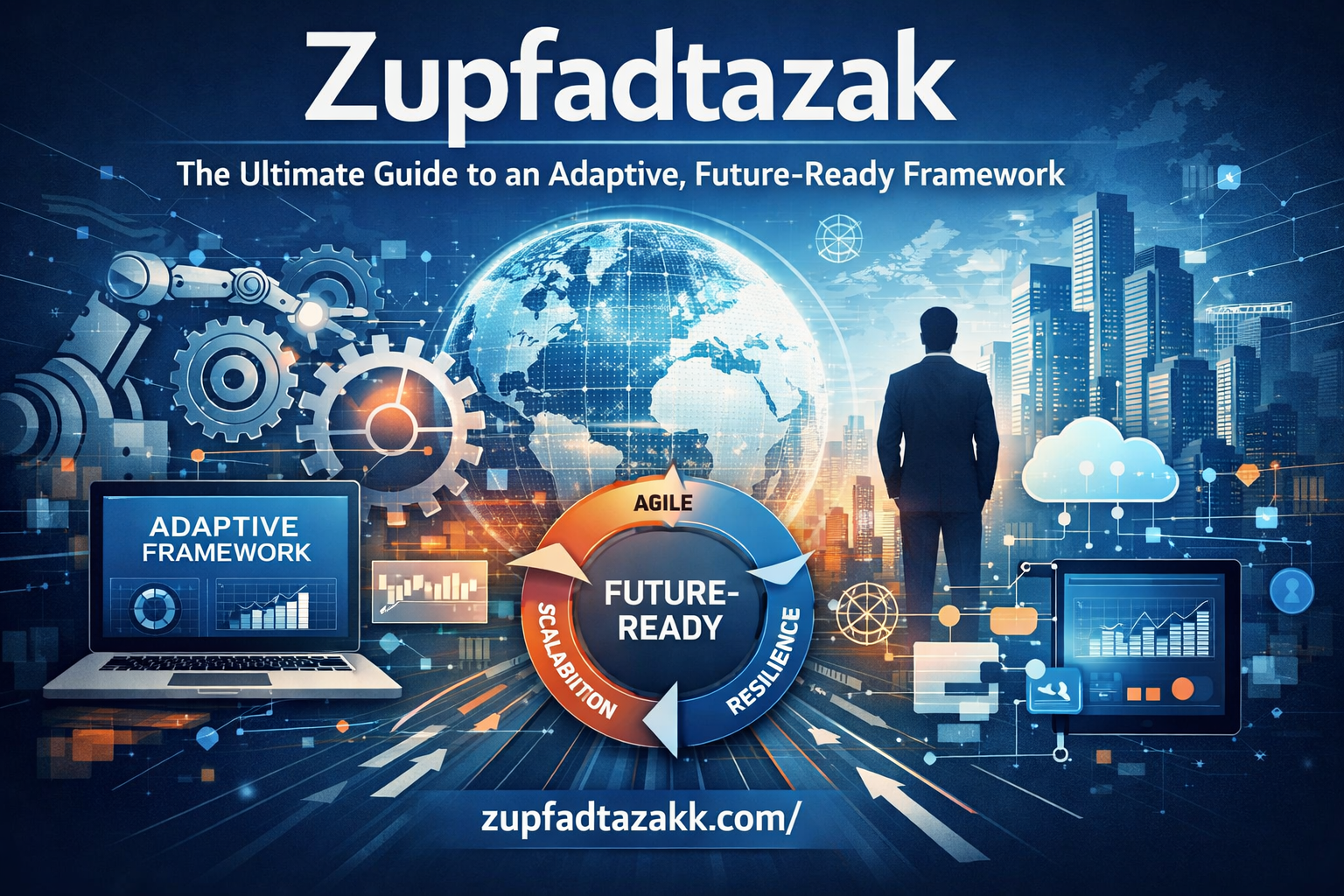
Unlocking the Power of Zupfadtazak: The Definitive Guide to an Emerging Concept
Imagine stumbling upon a term that feels mysterious, yet full of possibility — zupfadtazak. It’s the kind of word that makes you pause, curious about its purpose, its relevance, and why it’s appearing more often in innovative discussions, niche communities, and forward‑thinking strategies. In this in‑depth guide, we’re not just defining zupfadtazak. We’re giving you a complete, expert look at what it means, how it works, why it matters, and how it could play a role in future trends, technologies, or creative frameworks.
Whether you’re a marketer, developer, strategist, or curious thinker, this article is designed to be the go‑to resource on zupfadtaza — structured for clarity, rich in insights, and optimized to help you understand, apply, and think critically about this concept in real‑world contexts.
What Is Zupfadtazak? A Foundational Overview
At first glance, zupfadtazak might seem like jargon — but like many emerging terms, it reflects a deeper synthesis of ideas around complexity, adaptability, and integrated systems. In essence, zupfadtazak represents a conceptual framework or meta‑approach for navigating environments that are dynamic, ambiguous, and interdependent.
In practice, zupfadtazak encourages practitioners to think beyond traditional linear methods. It values adaptability, iterative learning, and a kaleidoscope of perspectives. While the term itself may not have originated in mainstream literature, its underlying principles echo in disciplines ranging from systems thinking to creative problem solving.
The Origins of Zupfadtazak and Its Evolution
The roots of zupfad tazak are less about etymology and more about context — emerging from interdisciplinary discourse where thinkers blended linguistic play with analytical depth. Early adopters of the term used it as a shorthand for frameworks that defy conventional classification.
Over time, zupfad tazak has evolved as a cultural touchstone that symbolizes experimentation, integration, and creative synthesis. Its growth reflects a broader shift toward valuing hybrid skills, multi‑dimensional thinking, and organic problem‑solving approaches that resist rigid compartmentalization.
Why Zupfadtazak Matters in Today’s Digital Landscape
In an era where technologies and industries evolve at breakneck speed, traditional models of knowledge and process struggle to keep up. Zupfadtazak matters because it centers adaptability — a quality that allows individuals and organizations to thrive amid disruption.
Think of zupfadtazak as a guiding principle for resilience in turbulent contexts. It invites practitioners to balance structure with flexibility, to blend data with intuition, and to embrace uncertainty not as a barrier but as fertile ground for innovation.
Core Principles Underlying Zupfadtazak
At the heart of zupfad tazak are a few core principles: contextual awareness, iterative adaptation, cross‑domain insight, and emergent strategy. Each of these contributes to an approach that is both robust and responsive.
Contextual awareness ensures that decisions are informed by a deep understanding of the environment, actors, and variables at play. Iterative adaptation emphasizes learning through feedback loops, while cross‑domain insight values knowledge synthesis from diverse fields. Together, these principles form the DNA of zupfadtazak thinking.
How Zupfadtazak Differs from Traditional Frameworks
Traditional frameworks often rely on linear progression, rigid stages, and fixed outcomes. In contrast, zupfadtazak embraces fluidity, feedback, and uncertainty. This makes it particularly suitable for environments characterized by volatility, complexity, and interdependence.
Instead of predicting outcomes from predetermined inputs, zupfad tazak encourages exploration, real‑time recalibration, and emergent understanding. It’s less about following a map and more about learning to navigate with a compass in shifting terrain.
Practical Applications: Integrating Zupfadtazak in Business Strategy
In business contexts, zupfadtazak can inform strategic planning, innovation pipelines, and leadership development. Companies that integrate its principles often outperform peers in adaptability and resilience.
For instance, a product team harnessing zupfad tazak might prioritize customer learning loops, prototype rapidly, and recalibrate based on nuanced feedback rather than fixed roadmaps. This fosters not only agility but also a culture that values experimentation over perfection.
Zupfadtazak in Creative and Design Processes
Creativity thrives where rules are flexible and ideas intersect. Zupfadtazak amplifies this by inviting creators to combine disparate ideas, challenge assumptions, and iterate relentlessly.
In design thinking, applying zupfad tazak involves reframing problems, testing bold hypotheses, and celebrating partial failures as gateways to deeper insight. It transforms creativity from an occasional spark into a disciplined, exploratory practice.
Zupfadtazak and Learning Systems
Learning, whether individual or organizational, benefits when it moves beyond static curricula to dynamic exploration. Zupfadtazak aligns with adaptive learning systems that evolve based on performance, feedback, and contextual shifts.
Educational models that integrate zupfad tazak principles might use modular content, real‑world problem challenges, and learner autonomy to foster deeper engagement. This prepares learners not only with knowledge but with the agility to use it creatively.
Measuring Success: Metrics for Zupfadtazak‑Driven Initiatives
One challenge with emerging frameworks like zupfad tazak is measurement. Traditional key performance indicators (KPIs) often miss the subtle gains created through adaptability and iteration.
Metrics aligned with zupfadtazak emphasize learning velocity, pivot effectiveness, stakeholder feedback richness, and resilience indicators. These measures reward process insights and emergent value rather than rigid output counts.
Table: Zupfadtazak vs Conventional Approaches
This table breaks down the conceptual differences between zupfadtazak and more traditional frameworks to give you a clear view of their practical implications.
| Dimension | Zupfadtazak | Conventional Approach |
| Predictability | Embraces uncertainty | Seeks fixed outcomes |
| Strategy | Emergent, adaptive | Planned, predictive |
| Feedback | Continuous, integrated | Periodic, stage‑based |
| Learning | Iterative, exploratory | Sequential, predefined |
| Risk | Managed through experimentation | Avoided through control |
| Creativity | Central to process | Supplementary |
| Metrics | Dynamic, qualitative + quantitative | Quantitative focus |
| Decision Making | Decentralized, informed by context | Centralized, rule based |
This comparison reveals how zupfad tazak fosters flexibility and resilience without sacrificing rigor, positioning it as a valuable alternative or complement to traditional models.
Common Misconceptions About Zupfadtazak
One common misconception is that zupfad tazak is vague or lacks structure. On the contrary, its strength lies in structured adaptability — a balance of discipline and openness to change.
Another misunderstanding is that zupfad tazak is only for creative industries. In reality, its principles apply broadly, from tech innovation to organizational transformation, strategic foresight to policy design. It’s not industry‑specific but mindset‑enhancing.
Tools and Techniques That Complement Zupfadtazak
Tools that support zupfad tazak thinking include systems mapping, iterative prototyping platforms, and real‑time data feedback dashboards. These tools enable rapid cycles of hypothesis, test, and recalibration.
Techniques such as scenario planning, cross‑functional workshops, and reflective retrospectives also align with zupfad tazak principles. The goal is to embed responsiveness into regular workflows, making adaptation a practiced competency.
Organizational Culture and Zupfadtazak
A culture that embraces zupfadtazak values curiosity, psychological safety, and shared learning. Leaders in such environments model humility, encourage experimentation, and recognize contributions beyond metrics.
This cultural orientation allows teams to challenge assumptions, celebrate incremental progress, and stay aligned with long‑term purpose while navigating short‑term uncertainty.
Leadership in Zupfadtazak‑Driven Environments
Leaders who embody zupfad tazak demonstrate both strategic clarity and tactical flexibility. They guide without over‑controlling, ask more questions than they answer, and empower teams to learn from outcomes.
These leaders balance confidence with curiosity, valuing decision agility over rigid completeness. Their presence shapes environments where innovation thrives and change becomes an asset, not a threat.
Real‑World Case Insight: Hypothetical Zupfadtazak Implementation
Imagine a technology startup that adopts zupfad tazak as a core practice. Instead of setting rigid annual goals, the startup structures quarterly learning cycles with adaptable milestones. Teams use customer signals to pivot features weekly.
Early challenges include ambiguity and initial discomfort with open‑ended goals. Over time, the company reports faster user insights, stronger product‑market fit, and a culture that embraces discovery over perfection — all hallmark benefits of zupfad tazak thinking.
“When we stopped treating change as a disruption and started treating it as our compass, we unlocked capabilities we didn’t know we had.”
— Innovation Lead at a hypothetical zupfad tazak‑inspired organization
Common Situations Where Zupfadtazak Excels
Zupfadtazak is particularly powerful in fast‑changing markets, early‑stage ventures where unknowns abound, R&D environments, and cross‑disciplinary collaborations. In these contexts, rigid plans are more likely to fail than fluid, adaptive strategies.
By foregrounding real‑time learning and flexible responses, zupfadtazak enables teams to stay responsive to signals that traditional models might overlook or dismiss.
Challenges and Limitations of Zupfadtazak
No framework is without challenges. Some critics argue that zupfadtazak may feel unstructured or harder to justify within conservative organizational cultures. It requires trust, communication, and tolerance for ambiguity.
Mitigating these challenges involves pairing zupfadtazak with clear interim goals, transparent feedback mechanisms, and leadership that can narrate progress even when outcomes remain emergent.
Integrating Zupfadtazak With Existing Frameworks
You don’t need to abandon traditional approaches to benefit from zupfadtazak. Many organizations integrate its principles with agile methodologies, design thinking practices, or balanced scorecards.
This hybrid approach allows teams to anchor their work in stable objectives while retaining the flexibility to adapt methods and measures based on evolving contexts.
The Future of Zupfadtazak in Innovation
As industries continue to converge and complexity deepens, zupfadtazak is positioned as a foundational mindset for future innovation ecosystems. Its emphasis on adaptive intelligence, rapid learning loops, and integrative thinking resonates with forward‑looking strategists.
We anticipate more tools, communities, and frameworks adopting zupfadtazak language and practices, further embedding its core principles in organizational design and human‑centered innovation.
Conclusion
Zupfadtazak is more than a term — it’s a lens for seeing opportunity in complexity and navigating change with intention. Whether you are exploring new strategic paradigms, enhancing creative processes, or building resilient learning systems, the principles of zupfadtazak offer a compass for futures where adaptability is not optional but essential.
By embracing its core tenets — emergent strategy, continuous feedback, cross‑domain insight, and adaptive leadership — you position yourself and your organization to thrive in dynamic, unpredictable environments. Let zupfadtazak inspire not just what you do, but how you think.
Frequently Asked Questions
What exactly does the term zupfadtazak mean?
Zupfadtazak refers to a conceptual approach emphasizing adaptability, iterative learning, and integrative thinking in complex, dynamic environments. It’s less about a fixed definition and more about principles you can apply to strategy and process.
How can zupfadtazak be applied in everyday business practices?
You can apply zupfadtazak by fostering continuous feedback loops, encouraging experimentation, and balancing structure with flexibility in planning. Teams integrate learning cycles and adjust based on real‑world signals rather than rigid forecasts.
Is zupfadtazak suitable for traditional industries?
Absolutely. While zupfadtazak aligns well with innovation sectors, its principles of adaptability and contextual understanding can strengthen traditional industries facing disruption or seeking resilience.
What tools support a zupfadtazak approach?
Tools that support zupfadtazak include real‑time feedback dashboards, systems‑thinking platforms, iterative prototyping software, and collaborative learning frameworks that prioritize adaptability and insight generation.
How do you measure success with a zupfadtazak‑inspired strategy?
Success in a zupfadtazak strategy is measured by learning velocity, adaptation effectiveness, stakeholder feedback richness, and resilience indicators. These metrics emphasize process gains and emergent value rather than just fixed outputs.





Leave a Reply